
Best Scans for Fertility Planning Explained

A fertility plan can feel as though it starts with a long list of unanswered questions: Are you ovulating? Is there anything affecting the uterus or ovaries? Is it worth seeking specialist support now? When people search for the best scans for fertility planning, they are usually looking for clarity before deciding what to do next.
Ultrasound cannot answer every fertility question, and no single scan can predict whether someone will conceive. What it can do is provide a clear, real-time view of key pelvic structures. For many people, that information replaces uncertainty with a more informed conversation - whether that is with a GP, a fertility specialist, or simply between partners planning their next step.
What a fertility ultrasound can assess
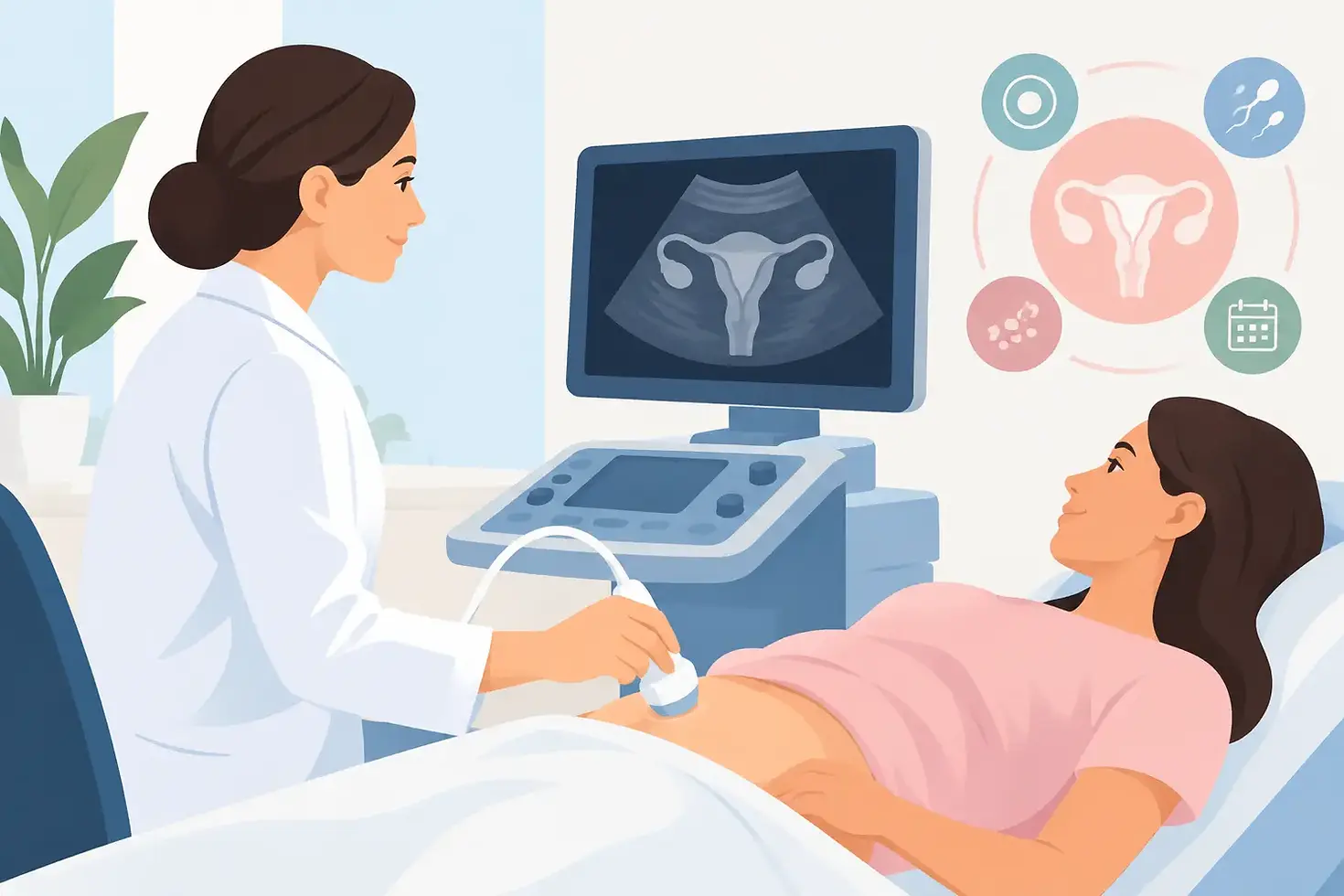
A pelvic fertility scan is designed to look at the uterus and ovaries in detail. Depending on the scan type and the point in your cycle, a qualified sonographer may assess the shape and appearance of the uterus, the womb lining, the ovaries and visible follicles.
This can be helpful if you are beginning to try for a baby, have irregular cycles, are concerned about symptoms such as pelvic pain or heavy periods, or are preparing for fertility treatment. It may also provide useful information for those with a known condition, including polycystic ovary syndrome (PCOS), who want to understand their ovarian appearance alongside advice from their clinician.
A scan is an assessment of what can be seen on the day. It does not replace blood tests, sperm analysis, ovulation testing or specialist fertility investigations. It also cannot reliably confirm whether the fallopian tubes are open. These distinctions matter because fertility is shared between many factors, not one image or one result.
The best scans for fertility planning depend on your question
The right scan is led by the information you need, rather than by a one-size-fits-all package. A good clinic should explain what the scan can assess, what it cannot assess, and whether the timing of your appointment may affect the findings.
Pelvic fertility scan
A pelvic fertility scan provides an overview of the uterus, womb lining and ovaries. It can be performed abdominally, through the lower tummy, and in many cases transvaginally for more detailed imaging. A transvaginal scan uses a slim, covered probe inserted gently into the vagina. It is a routine examination, performed with your consent and privacy in mind, and often gives the clearest view of the ovaries and pelvic organs.
This scan may identify features that warrant discussion with a healthcare professional, such as fibroids, ovarian cysts, a uterine polyp or changes in ovarian appearance. Not every finding affects fertility, and many are common. The value lies in having a clear report and knowing whether follow-up is advisable.
Antral follicle count scan
Antral follicles are small fluid-filled sacs in the ovaries that can be seen on ultrasound at the beginning of a menstrual cycle. Counting them can contribute to an overall picture of ovarian reserve - the likely number of eggs remaining in the ovaries.
An antral follicle count is not an egg count, and it does not measure egg quality. Age, medical history and blood tests such as AMH are all relevant parts of a fertility assessment. However, an ultrasound follicle count can be a useful piece of the picture, particularly for people considering fertility treatment or seeking a baseline assessment.
For the most consistent result, this scan is often arranged in the early part of the cycle, commonly between days two and five. Your sonographer can advise on suitable timing when you book.
Follicle tracking scan
Follicle tracking involves more than one scan during a menstrual cycle. Its purpose is to monitor whether a dominant follicle is developing and to observe changes that may suggest ovulation is approaching or has taken place.
This can be useful for people with irregular cycles, those taking ovulation-induction medication under medical supervision, or couples trying to understand their fertile window. The trade-off is that it requires carefully timed appointments rather than a single visit. It can offer valuable insight, but it should not be used as a substitute for clinical guidance where medication or a diagnosed fertility condition is involved.
PCOS-focused ovarian assessment
PCOS is a hormonal condition diagnosed using a combination of symptoms, hormone results and, where relevant, ovarian appearance. An ultrasound can assess for polycystic ovarian morphology, but it cannot diagnose PCOS in isolation.
That is a reassuring point for many patients. Seeing multiple follicles on an ovary does not automatically mean you have PCOS, and some people with PCOS do not have that appearance on a scan. A careful report can support a conversation with your GP or specialist without jumping to conclusions.
When should you book a fertility scan?
The best time depends on the reason for the scan. If you would like an antral follicle count, early-cycle timing is usually preferable. If you are having follicle tracking, appointments need to follow your cycle and may be arranged several days apart. For a general pelvic assessment, there is often more flexibility, although heavy bleeding can occasionally affect image quality or your comfort.
If your periods are very irregular, absent, or difficult to predict, do not assume a scan is pointless. Let the clinic know when you book. The sonographer can explain which appointment type is likely to be most useful and whether you should attend at a particular time.
It is also sensible to share relevant information, including the first day of your last period, any fertility medication, previous pelvic surgery, known diagnoses and symptoms. These details help place the ultrasound findings in the right context.
What to expect at a private fertility scan
A fertility scan should feel calm, respectful and straightforward. You will be asked questions about your cycle and the reason for your appointment. The sonographer will explain the examination, including whether an abdominal, transvaginal or combined approach is recommended. You can ask questions before consenting, and you can decline or stop a transvaginal scan at any point.
For an abdominal pelvic scan, a full bladder may be requested because it can improve the view of pelvic organs. For a transvaginal scan, an empty bladder is normally more comfortable and provides clearer imaging. Follow the preparation instructions supplied for your appointment rather than guessing.
At Nu Scan Ultrasound, fertility imaging is carried out in a private, patient-centred setting by qualified professionals, with time to explain the findings clearly. A written report can be particularly helpful if you are sharing the results with your GP, consultant or fertility clinic.
What a scan cannot tell you
Clear expectations protect people from false reassurance and unnecessary worry. Even a detailed pelvic ultrasound cannot confirm that you will conceive naturally, establish egg quality, diagnose every cause of infertility or test whether sperm can fertilise an egg.
Ultrasound has limits with fallopian tubes too. Unless they are visibly swollen or affected by a significant abnormality, their patency cannot usually be confirmed during a standard pelvic scan. Tests specifically designed to assess tubal patency may be discussed by a fertility specialist when appropriate.
For couples, fertility planning is most effective when both partners are considered early. A pelvic scan may be highly relevant for one person, while semen analysis and medical history are equally important for the other. Starting with balanced information can avoid delays and reduce the tendency to place all the focus on one partner.
When to seek further medical advice
A scan report may recommend follow-up if it identifies a feature needing clinical review. You should also speak with your GP or fertility specialist if you have been trying to conceive for 12 months without success, or for six months if you are aged 35 or over. Earlier advice is sensible if periods are absent or very irregular, there is known endometriosis or PCOS, previous pelvic infection or surgery, recurrent miscarriage, or concerns about male fertility.
Seek urgent medical advice for severe or worsening pelvic pain, heavy bleeding, fainting, shoulder-tip pain in early pregnancy, or a positive pregnancy test with pain or bleeding. A fertility scan is planned care and is not a substitute for urgent assessment.
Choosing a scan is not about finding a perfect answer in one appointment. It is about giving yourself reliable information, delivered with care, so that the next conversation and the next decision feel a little clearer.


Comments